
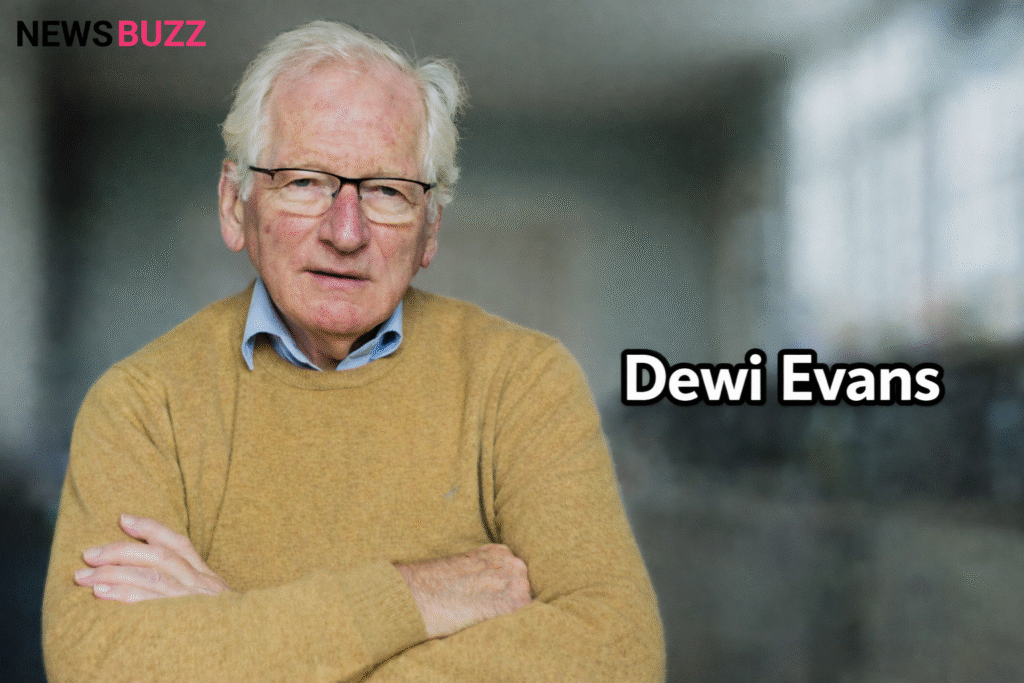

Introductio
Dewi Evans is a name that now resonates far beyond the walls of British hospitals. A respected consultant paediatrician turned expert witness, his career has spanned over four decades and brought him into the center of one of the most haunting legal cases in modern British history—the Lucy Letby trial. His involvement in that case sparked public debate and professional scrutiny, casting light on both the strengths and potential pitfalls of expert testimony in criminal justice.
Evans’ work bridges two high-stakes worlds: clinical paediatrics and forensic medicine. His legacy is layered with pioneering contributions, ethical complexity, and legal controversy. For some, he is a heroic truth-seeker; for others, a figure who has raised difficult questions about the limits of medical opinion in the courtroom.
Quick Bio
- Full Name: Dewi Richard Evans
- Date of Birth: July 1949
- Profession: Consultant Paediatrician (retired), Expert Medical Witness
- Education: Cardiff Medical School
- Affiliations: FRCP, FRCPCH
- Specialization: Neonatology, Paediatrics, Forensic Medical Testimony
- Notable Work: Lead expert witness in the Lucy Letby murder trial
Also Read: Eanna Hardwicke: The Gritty Star Who Embraces Darkness and Lights Up the Screen
Early Life and Medical Foundations
Education and Early Career Progression
Dewi Evans began his academic journey in Wales, attending Carmarthen Grammar School before studying medicine at Cardiff Medical School. He qualified in 1971 and swiftly advanced through various clinical disciplines, initially gaining additional credentials in obstetrics and gynaecology before focusing on paediatrics. His dedication to learning and specialization led him to earn fellowship titles from both the Royal College of Physicians and the Royal College of Paediatrics and Child Health.
Evans’ early roles in hospitals across South Wales gave him hands-on experience in a range of paediatric and neonatal care challenges. These formative years not only honed his clinical instincts but also laid the groundwork for what would become a career of medical and legal consequence.
Consultant Leadership and Healthcare Contributions
He served as a consultant paediatrician at major hospitals such as Morriston and Singleton in Swansea. His responsibilities went beyond treatment; he was instrumental in developing new maternity and neonatal care systems in the region. As a clinical director, he was known for his firm leadership and for implementing protocols that improved newborn survival and care standards.
Evans’ reputation within medical circles was shaped by both his technical knowledge and his willingness to challenge institutional inertia. His work wasn’t confined to hospital wards—he helped shape paediatric guidelines and spoke publicly on matters affecting child health policy in the UK.
Transition to Expert Witness: A Second Career
Founding a Consultancy in Paediatrics
After retiring from full-time clinical work in 2009, Dewi Evans founded Dewi Evans Paediatric Consulting Ltd, shifting his focus to legal and forensic review. His goal was to offer expert medical opinion in cases where children’s health or deaths required specialist scrutiny. These included clinical negligence claims, suspected child abuse, family court matters, and, most notably, criminal cases involving infant fatalities.
His expertise in interpreting complex medical records made him a sought-after figure in legal circles. Lawyers on both sides of the courtroom valued his ability to distill medical jargon into understandable, court-friendly explanations.
Key Cases and Legal Footprint
Evans worked on numerous legal cases over the years, but none matched the national significance of the Lucy Letby trial. Tasked with reviewing unexplained deaths and collapses of babies in a neonatal unit, Evans became the lead expert for the prosecution. His interpretation of clinical notes and postmortem findings became a cornerstone of the Crown’s argument that foul play was involved.
His testimony, while powerful, was not without criticism. Some experts and legal commentators questioned elements of his methodology, including instances where his medical opinions evolved over the course of the investigation. Still, the weight of his evidence was significant in helping the jury reach a verdict.
Strengths, Criticisms, and the Weight of Influence
Depth of Experience and Authority
Few experts bring as much clinical gravitas to court as Dewi Evans. His decades in neonatal and paediatric medicine are unmatched by many in his field. His commitment to thorough case review, cautious yet decisive language, and willingness to confront difficult truths have earned him recognition among colleagues and prosecutors.
His reports often seek to combine physiological explanation with pattern analysis, particularly in multi-case scenarios such as serial infant deaths. He has repeatedly stated that he serves the court—not the prosecution or defense—a guiding principle he believes ensures impartiality.
Controversies and Judicial Pushback
Evans’ credibility has been challenged in several legal contexts. In one case, a judge described one of his expert reports as “worthless,” citing a lack of balance. In others, defense teams have pointed out inconsistencies in his opinions over time or suggested that he sometimes overstepped his medical scope when drawing legal conclusions.
The Lucy Letby trial intensified this scrutiny. Some viewed his interpretations of air embolism and other causes of death as speculative, particularly given the complexity of neonatal care. Nonetheless, the presiding judge allowed his testimony, ruling that it was for the jury to determine its credibility.
A Legacy of Impact and Ethical Debate
Advancing Forensic Paediatrics
Evans has played a defining role in legitimizing paediatric forensic consulting as a vital legal tool. By applying medical expertise to court proceedings, he has helped clarify difficult cases that once seemed medically ambiguous. His work highlights the importance of experienced clinicians in ensuring justice in sensitive child-related matters.
His contribution has pushed both the legal and medical fields to ask harder questions: How much certainty is required for an expert opinion? Where does science end and speculation begin? And how do we balance the need for justice with the limits of current medical understanding?
Walking the Line Between Justice and Judgment
Dewi Evans embodies the tensions that come with bridging medicine and law. On one hand, he is celebrated for giving voice to children who cannot speak for themselves. On the other, he has faced criticism for potentially misinterpreting ambiguous signs in complex environments like neonatal units.
Regardless of where one stands on his conclusions, it’s clear that his work has sparked valuable discussion about the role of expert witnesses, especially in high-stakes cases involving life and death.
Also Read: Mollie Rose Hodge: The Quiet Force in Mental Health Carving a Path Beyond Fame
Conclusion
Dewi Evans is not a figure easily categorized. He is a medical pioneer, a courtroom influencer, and a lightning rod for debate. His long-standing career in paediatrics earned him deep respect, while his later role as an expert witness placed him at the epicenter of legal and ethical controversy.
In his dual identity as clinician and consultant, Evans has shaped how courts view paediatric evidence. His testimony has had the power to convict, challenge, and provoke—but above all, it has reminded us of the profound responsibility that comes with interpreting life through a medical lens.
For some, Dewi Evans is a hero of justice; for others, a figure who illustrates the dangers of over-reliance on medical opinion in legal matters. What remains undeniable is his impact. His voice changed the course of history in one of Britain’s most infamous criminal trials—and his legacy will continue to shape discussions on justice, expertise, and accountability.
FAQs
Who is Dewi Evans?
Dewi Evans is a retired consultant paediatrician and expert medical witness from the UK, known for his involvement in complex child death and abuse cases, including the high-profile Lucy Letby trial.
What was his role in the Lucy Letby case?
He served as the lead medical expert for the prosecution, reviewing neonatal records and providing analysis on possible causes of infant death, which became key in the trial’s outcome.
Has Dewi Evans faced criticism?
Yes, some of his reports and testimony have been challenged in court, with critics citing evolving medical opinions or overinterpretation in complex cases.
What is his medical background?
Evans trained at Cardiff Medical School, worked for decades in Swansea hospitals, and held fellowships in major medical colleges, specializing in paediatrics and neonatology.
Is he still active as a medical expert?
As of recent reports, he has stepped back from new casework but his consultancy work and past testimony continue to influence the legal and medical fields.