

How a fearless English journalist and economist transformed the world’s understanding of data, decisions, and human error
Introduction
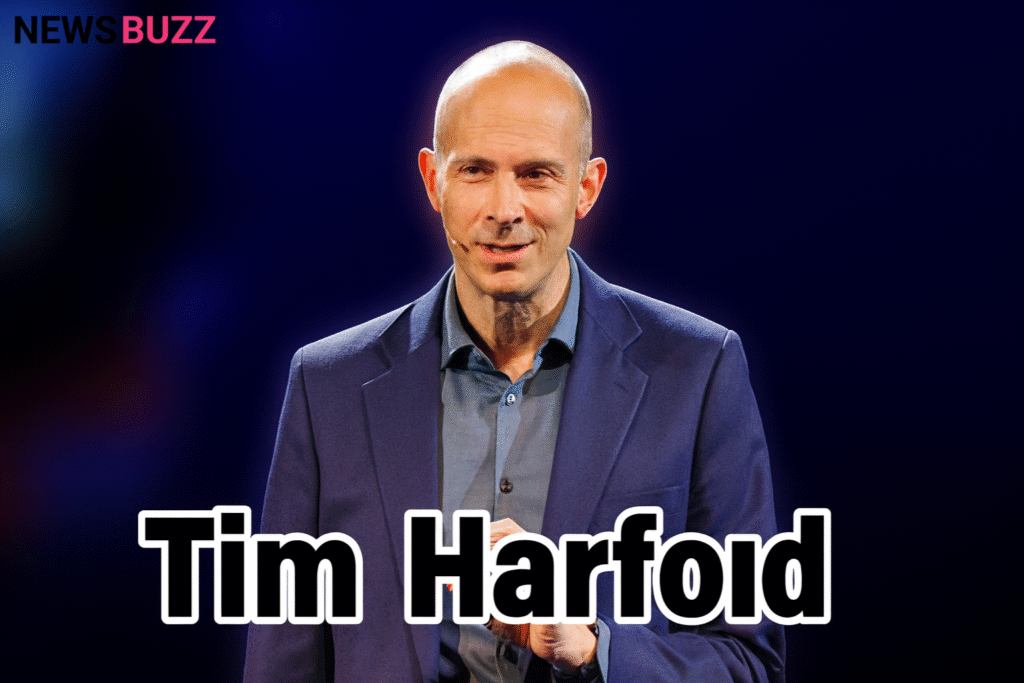
Tim Harford is widely recognised as one of the most influential voices in modern economic communication. As an English journalist, economist, author, and broadcaster, he has reshaped how everyday people understand complex subjects such as statistics, markets, risk, and uncertainty. His unique talent lies in transforming abstract ideas into relatable human stories that educate without overwhelming.
Yet, alongside his praise and reputation for clarity, Tim Harford’s work also attracts discomfort and resistance. By exposing flawed data, misleading narratives, and public misunderstanding, he often disrupts convenient beliefs. This combination of public trust and professional challenge defines both the positive and demanding sides of his extraordinary career.
Quick Bio of Tim Harford
| Field | Details |
|---|---|
| Full Name | Timothy Douglas Harford |
| Date of Birth | 27 September 1973 |
| Birthplace | Kent, England |
| Nationality | British |
| Profession | Economist, English Journalist, Broadcaster, Author |
| Education | BA (PPE), MPhil (Economics), University of Oxford |
| Known For | The Undercover Economist, BBC More or Less, Cautionary Tales |
| Awards | Bastiat Prize, OBE (2019) |
| Source of Income | Journalism, broadcasting, books, public speaking |
| Language | English |
Early Life and Education
Formative Years in England
Tim Harford was born on 27 September 1973 in Kent, England. His early life took place in a traditional English environment that encouraged academic discipline and intellectual development. While he has remained private about many childhood details, his later career shows clear signs of early curiosity about how societies function.
Growing up in England exposed him to political debate, economic change, and public discourse at an early stage. These influences later shaped his interest in how numbers, policy, and human behaviour intersect in real life.
Oxford Education and Academic Training
He pursued higher education at Brasenose College, University of Oxford, where he completed a Bachelor’s degree in Philosophy, Politics, and Economics. He later earned a Master of Philosophy in Economics in 1998. This rigorous academic training became the foundation of his analytical style.
Oxford equipped him with both economic theory and critical thinking skills. More importantly, it taught him how to challenge assumptions, test arguments with evidence, and communicate complex ideas clearly.
Career Beginnings and Journalism Path
Entry into Professional Journalism
Tim Harford began building his reputation as an English journalist through economic commentary. In 2003, he joined the Financial Times, where his writing quickly stood out for clarity and originality. His work helped bridge the gap between complex economic research and public understanding.
His career reflects a disciplined rise built on skill rather than publicity. Rather than chasing headlines, he focused on explaining the deeper forces behind daily economic events.
The Undercover Economist Identity
His column, The Undercover Economist, became his defining professional identity. Through it, he revealed the hidden economic logic behind everyday life—from food prices to transport systems and housing markets.
The strength of this work lies in its accessibility. He avoids jargon and replaces it with narrative explanation, allowing readers from all backgrounds to engage with economic thinking.
Broadcasting, Podcasts, and Media Influence
BBC and Public Broadcasting
Since 2007, Tim Harford has presented the BBC Radio 4 programme More or Less. This show examines how statistics are used—and misused—in public life. It dissects numbers behind news headlines and political claims, exposing exaggeration, confusion, and manipulation.
Through this role, he became one of the most trusted voices in British data journalism. His work teaches audiences not what to think, but how to think critically about numbers.
Podcasting and Storytelling
He is also the creator and host of the globally recognised podcast Cautionary Tales. The series explores disasters, mistakes, and failed decisions from history to reveal patterns in human error and risk.
By using storytelling instead of technical analysis, he broadens the reach of behavioural economics. This format allows learning through human experience rather than academic explanation alone.
Books and Intellectual Contributions
Breakthrough Works
Tim Harford achieved international success with The Undercover Economist, a book that transformed how economic ideas are communicated to the public. It demonstrated that economics is not confined to classrooms but operates within everyday decisions.
He followed this success with books such as The Logic of Life, Messy, Fifty Things That Made the Modern Economy, and The Data Detective. Each work explores how systems, innovation, disorder, and statistics shape modern society.
Global Impact of His Writing
His books have been translated into multiple languages and used in universities worldwide. Unlike traditional textbooks, his writing prioritises understanding over memorisation.
Through this global reach, he has influenced students, policymakers, journalists, and business leaders and reshaped how economic literacy is taught.
Public Speaking and Professional Recognition
International Speaker and Educator
Tim Harford is a highly respected keynote speaker at global conferences, corporate forums, universities, and policy institutions. His lectures focus on risk, evidence-based decision-making, innovation, and statistical literacy.
His speaking work extends his educational mission beyond books and broadcasts. It allows direct interaction with professionals who shape business and public policy.
Awards and Honours
He has received the Bastiat Prize for economic journalism and was appointed Officer of the Order of the British Empire in 2019 for services to improving economic understanding. These honours confirm both his credibility and his influence.
Legacy and Long-Term Impact
Champion of Data Literacy
Tim Harford’s most powerful contribution is his defence of truth through numbers. He has helped millions identify misleading statistics, weak arguments, and emotional manipulation disguised as data.
In a world shaped by misinformation, his voice strengthens public reasoning and responsible interpretation of evidence.
Challenging Comfortable Myths
While admired, his work also unsettles those who benefit from distorted numbers. His criticism of weak statistical reporting has challenged politicians, journalists, and institutions alike.
This tension between clarity and comfort defines the weight of his legacy. He is respected not for pleasing audiences, but for educating them.
Conclusion
Tim Harford is more than an English journalist—he is a global educator in economic thinking, data literacy, and critical reasoning. From Oxford classrooms to BBC studios and bestselling bookshelves, his journey reflects dedication to truth and public understanding.
His career proves that knowledge is most powerful when it is shared clearly. Through discipline, storytelling, and intellectual courage, Tim Harford has built a legacy that reshapes how the world understands decisions, systems, and numbers.
Frequently Asked Questions (FAQ)
Who is Tim Harford?
He is a British economist, English journalist, broadcaster, author, and public educator known for explaining economics and data to the general public.
What is Tim Harford famous for?
He is best known for The Undercover Economist, BBC More or Less, and the Cautionary Tales podcast.
Where was Tim Harford born?
He was born in Kent, England.
What is Tim Harford’s educational background?
He studied Philosophy, Politics, and Economics at Oxford and later earned an MPhil in Economics.
What is Tim Harford’s legacy?
His legacy lies in transforming how people understand statistics, economics, and human decision-making worldwide.