
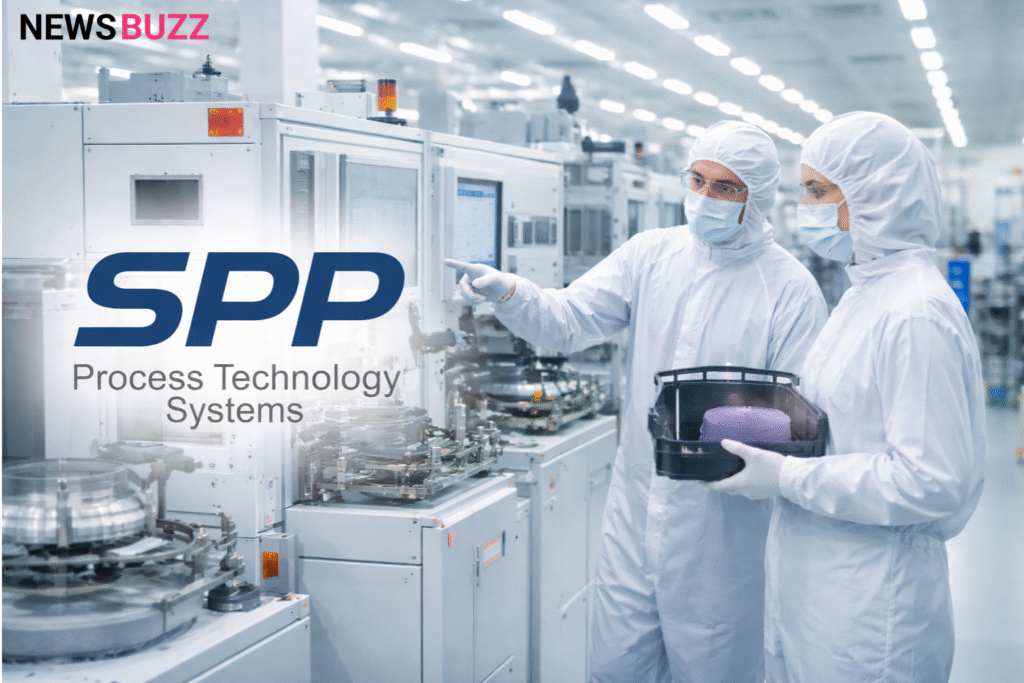

Understanding the Technology Focus, Industry Role, Strengths, and Real-World Limitations
Introduction
SPP Process Technology Systems is a name closely associated with advanced semiconductor manufacturing equipment and process innovation. For professionals working in microelectronics, wafer fabrication, and high-precision engineering, this name represents a period of focused technological development in plasma processing and thin-film manufacturing systems.
SPP Process Technology Systems represents a significant chapter in the evolution of semiconductor process equipment, particularly in areas requiring extreme precision and reliability. The company’s work reflected the demands of an industry where even minor process variations can impact performance at scale. By focusing on advanced manufacturing systems and engineering-driven solutions, it became closely associated with high-quality process control while also facing the commercial and operational pressures that define capital-intensive technology sectors.
What Is SPP Process Technology Systems?
SPP Process Technology Systems was a technology-focused organisation operating in the semiconductor process equipment sector. The company specialised in systems designed for wafer-level manufacturing processes used in microelectronics and related industries.
Its work centred on etching, deposition, and thermal processing technologies, which are fundamental steps in producing modern semiconductor devices. These systems supported both research environments and production-scale manufacturing.
Industry Context and Technology Focus
Semiconductor Process Equipment
SPP Process Technology Systems operated in a highly technical segment of the semiconductor supply chain. Rather than producing chips themselves, the company designed and supplied capital equipment used by manufacturers to fabricate devices at the microscopic level.
This position in the value chain is critical. Without reliable process equipment, advances in chip performance, miniaturisation, and yield are not possible.
Advanced Plasma and Thin-Film Technologies
The company became known for equipment supporting plasma-based processing and thin-film deposition. These technologies enable precise material removal or layer formation on wafers, measured at nanometre scales.
Such precision is essential for manufacturing MEMS devices, power semiconductors, and specialised electronic components.
Core Capabilities of SPP Process Technology Systems
Process Accuracy and Repeatability
One of the strongest technical attributes associated with SPP Process Technology Systems was process consistency. Semiconductor manufacturers depend on equipment that can deliver repeatable results across thousands of wafers.
High repeatability improves yield, reduces waste, and supports scalable production.
Support for Complex Device Architectures
As device structures became more complex, processing systems had to evolve. SPP Process Technology Systems focused on equipment capable of supporting deep structures, layered designs, and high-aspect-ratio features.
This capability positioned the company well in advanced and emerging semiconductor applications.
Applications and Market Use
MEMS and Micro-Devices
SPP Process Technology Systems equipment was particularly relevant to micro-electromechanical systems (MEMS) manufacturing. MEMS devices require precise etching and deposition to create movable micro-structures.
These components are widely used in sensors, automotive systems, and industrial applications.
Power and Specialty Semiconductors
Beyond MEMS, the company’s process technologies supported power electronics and specialised semiconductor devices. These markets value reliability, thermal performance, and material integrity.
Process equipment quality directly influences device durability and performance in real-world environments.
Strengths That Defined the Company
Engineering-Driven Culture
SPP Process Technology Systems was shaped by an engineering-first mindset. Product development focused on technical performance, process control, and customer-specific requirements.
This approach built credibility among advanced manufacturing customers but also demanded long development cycles.
Alignment With Industry Evolution
The company’s technology direction aligned with broader industry trends toward miniaturisation, precision, and process integration. This alignment allowed its equipment to remain relevant as fabrication requirements evolved.
Staying aligned with industry needs is essential in the semiconductor sector.
Challenges and Limitations
Capital-Intensive Market Pressures
Operating in semiconductor equipment manufacturing requires significant investment in research, tooling, and support infrastructure. This creates financial pressure, particularly during industry downturns.
Even technically strong companies face challenges when market cycles shift.
High Customer Expectations
Customers in semiconductor manufacturing demand extremely high uptime, rapid support, and continuous innovation. Meeting these expectations requires constant resource allocation.
Balancing innovation with operational stability is an ongoing challenge in this sector.
Corporate Transition and Industry Continuity
SPP Process Technology Systems did not disappear due to technical failure. Instead, like many companies in this sector, it underwent corporate restructuring and rebranding as part of broader strategic changes.
The technologies, expertise, and market presence developed under this name continued to influence the industry through successor organisations.
Why SPP Process Technology Systems Still Matters
Legacy of Process Innovation
The company’s work contributed to the advancement of modern wafer-level processing techniques. Many principles and system designs developed during this period influenced later equipment platforms.
Legacy matters in semiconductor manufacturing, where innovation builds incrementally.
Lessons for Technology-Driven Businesses
SPP Process Technology Systems illustrates how technical excellence must be paired with strategic adaptability. Strong engineering alone is not enough without alignment to market dynamics and operational scalability.
This lesson remains relevant for technology firms today.
Industry Perspective
From an industry standpoint, SPP Process Technology Systems represents a serious, technically credible contributor rather than a short-term or speculative operation. Its challenges were structural and market-driven, not a reflection of poor engineering.
Understanding this distinction helps professionals evaluate similar companies realistically.
Conclusion
SPP Process Technology Systems played a meaningful role in the semiconductor equipment landscape by delivering advanced processing solutions for precision manufacturing. Its strengths lay in engineering depth, process control, and alignment with complex fabrication needs.
At the same time, it faced the realities of a capital-intensive, highly competitive industry. The story of SPP Process Technology Systems highlights both the power and the pressure of operating at the cutting edge of semiconductor technology.
Frequently Asked Questions (FAQ)
What was SPP Process Technology Systems known for?
It was known for semiconductor process equipment focused on etching, deposition, and thermal processing technologies.
Did the company manufacture semiconductors directly?
No, it supplied equipment used by semiconductor manufacturers.
Why is the company no longer operating under this name?
Corporate restructuring and rebranding led to the transition, which is common in the semiconductor equipment industry.
Are its technologies still relevant today?
Yes, many of the process principles developed remain relevant in modern fabrication systems.
What can technology companies learn from SPP Process Technology Systems?
That long-term success requires both technical excellence and strategic adaptability in fast-evolving markets.