

Introduction
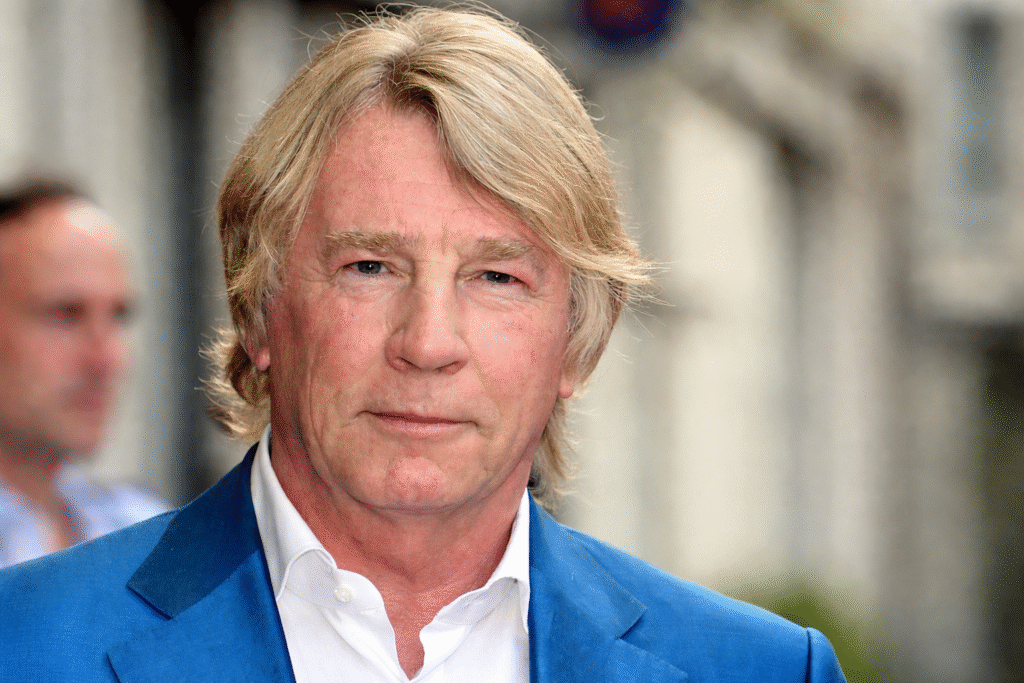
Rick Parfitt was one of the most recognisable figures in British rock music, a guitarist whose sound, energy, and personality became inseparable from the identity of Status Quo. For nearly five decades, he stood at the heart of a band that defined a particular kind of rock and roll: loud, direct, joyful, and relentlessly physical. To understand Rick Parfitt properly is to understand why rhythm guitar can be as powerful as any solo, and why simplicity, when driven with conviction, can outlast trends and fashions. His biography is not just the story of a musician, but of endurance, excess, recovery, and an unbreakable bond with live performance.
Quick Bio: Rick Parfitt
| Field | Details |
|---|---|
| Full Name | Richard John Parfitt |
| Known As | Rick Parfitt |
| Date of Birth | 12 October 1948 |
| Place of Birth | Woking, Surrey, England |
| Date of Death | 24 December 2016 |
| Place of Death | Marbella, Spain |
| Nationality | British |
| Profession | Musician, singer, songwriter |
| Famous For | Rhythm guitarist and vocalist of Status Quo |
| Years Active | 1965–2016 |
| Band Association | Status Quo |
| Musical Style | Hard rock, boogie rock |
| Notable Song | “Whatever You Want” |
| Instruments | Guitar, vocals |
| Health Milestones | Quadruple heart bypass (1997) |
| Final Release | Solo album Over and Out (2018, posthumous) |
| Legacy | One of British rock’s most influential rhythm guitarists |
Early Life and Musical Roots
Rick Parfitt was born Richard John Parfitt on 12 October 1948 in Woking, Surrey, England. Music entered his life early, not through elite institutions or formal academies, but through practical exposure and performance. As a teenager in the 1960s, he began playing in bands that worked the British holiday camp circuit, an environment that demanded stamina, versatility, and the ability to hold an audience’s attention night after night.
These early experiences shaped Parfitt’s approach to music. Holiday camps were not places for experimentation or indulgence; they were places where performers learned quickly what worked and what did not. Songs needed to be immediate, rhythm needed to be strong, and energy could never drop. This environment helped form the foundations of the style that would later define his career.
Joining Status Quo and Finding His Role
Rick Parfitt joined Status Quo in 1967, at a time when the band itself was evolving. The late 1960s were years of experimentation for British rock groups, but Status Quo gradually moved toward a heavier, more driving sound. Parfitt’s arrival proved decisive in that shift. His rhythm guitar style, based on relentless downstrokes and tightly locked timing, gave the band a new sense of force and direction.
Over time, his role expanded beyond guitarist to frontman, vocalist, and songwriter. Status Quo’s sound became anchored around repetition and groove rather than complexity, and Parfitt was central to making that approach work. He did not play rhythm guitar as a background role; instead, he treated it as the engine of the band, pushing every song forward with physical intensity.
Rhythm Guitar and a Defining Sound
Rick Parfitt’s musical legacy rests largely on his rhythm guitar work. In a genre often dominated by lead players and extended solos, he proved that rhythm could carry just as much power. His playing style was aggressive, precise, and unwavering, creating a wall of sound that drove Status Quo’s music forward without distraction.
This approach suited the band’s philosophy perfectly. Status Quo songs were designed to be played live, loudly, and with momentum. Parfitt’s guitar work gave those songs weight and urgency, turning simple chord progressions into anthems that could fill arenas. His ability to maintain intensity over long performances became one of the band’s defining characteristics.
Songwriting and Commercial Success
Rick Parfitt was also a key songwriter within Status Quo. While the band never positioned itself as lyrically complex, its songs succeeded because they understood their purpose. Parfitt co-wrote tracks that balanced immediacy with memorability, producing music that was instantly recognisable and endlessly repeatable without becoming stale.
One of the most notable examples is “Whatever You Want,” released in 1979. The song became one of Status Quo’s most successful singles and demonstrated Parfitt’s instinct for crafting rock music that worked both on record and in live performance. His songwriting rarely strayed from the band’s core identity, but that consistency was precisely what made it effective.
Partnership and Band Dynamics
For much of his career, Rick Parfitt’s public image was closely tied to his partnership with fellow Status Quo frontman Francis Rossi. Together, they formed the stable centre of a band that toured relentlessly and remained commercially visible for decades. Their musical relationship was built on mutual understanding rather than contrast, with both guitarists contributing to a unified sound rather than competing for dominance.
This partnership helped Status Quo maintain continuity even as the music industry changed dramatically around them. While many bands fractured under the pressure of long careers, Parfitt and Rossi kept the group focused on its core mission: delivering high-energy rock music that audiences could rely on.
Life on the Road and Rock and Roll Excess
Rick Parfitt lived the rock and roll lifestyle fully, and the consequences of that lifestyle became an important part of his biography. Decades of touring, combined with heavy use of alcohol and drugs, took a toll on his health. He spoke openly about these struggles later in life, acknowledging both the damage they caused and the difficulty of changing habits formed under constant pressure.
In 1997, Parfitt underwent a quadruple heart bypass operation, a serious medical intervention that highlighted the physical cost of his lifestyle. Despite this, he returned to touring, driven by a deep attachment to performance and to the audience connection that defined his career. His determination to continue working, even after major health scares, reinforced his reputation as a musician who lived for the stage.
Later Years and Health Challenges
By the mid-2010s, Rick Parfitt’s health had become increasingly fragile. In June 2016, he was hospitalised after a suspected heart attack following a Status Quo performance in Turkey. This incident marked a turning point. Later that year, it was announced that he would no longer tour with the band, bringing an end to one of the longest continuous performing careers in British rock.
For fans, this moment was bittersweet. While there was relief that he was prioritising his health, there was also a clear sense that Status Quo without Rick Parfitt on stage would never feel the same. His physical presence, energy, and unmistakable playing style had been integral to the live experience for generations.
Death and Public Response
Rick Parfitt died on 24 December 2016 in Marbella, Spain, after developing a severe infection that led to sepsis. His death on Christmas Eve shocked fans and fellow musicians alike, triggering widespread tributes across the music world. Many emphasised not only his musical contributions, but also his personality and the visible joy he brought to performance.
The timing of his death added emotional weight, turning an already reflective period of the year into an annual reminder of loss for fans. Yet the response also highlighted the affection and respect he had earned through decades of dedication to his craft.
Final Music and Posthumous Recognition
After his death, Rick Parfitt’s solo album “Over and Out” was released in 2018. The record offered insight into his musical identity beyond Status Quo, presenting songs that reflected both his roots and his desire to explore different expressions late in life. For many listeners, the album felt like a final conversation with an artist who had spent most of his career speaking through the collective voice of a band.
The release reinforced the idea that Parfitt’s creativity extended beyond a single role. While Status Quo defined his public legacy, his musical instincts were broader and more personal than many casual listeners realised.
Legacy and Lasting Influence
Rick Parfitt’s legacy lies in his ability to turn rhythm into power. He demonstrated that rock music does not need complexity to be effective, only commitment, timing, and belief in the groove. His influence can be heard in countless bands that prioritise feel over flash, and his career remains a reference point for musicians who value connection with audiences above all else.
He also left behind a more human legacy: a reminder of both the rewards and costs of life on the road. His openness about health struggles and excess added depth to his public image, transforming him from a rock caricature into a figure whose life reflected real vulnerability as well as strength.
Conclusion
Rick Parfitt was more than a guitarist in a successful band. He was a defining force in British rock, a musician whose rhythm playing became a signature sound and whose energy shaped live performance for nearly half a century. From his early days in holiday camps to his final years as a rock icon, his life was driven by music, movement, and an unwavering connection to audiences.
His story is one of intensity, resilience, and enduring influence. Even years after his death, the continued interest in Rick Parfitt reflects how deeply his work resonated. Through Status Quo and beyond, he left a body of music that remains immediate, physical, and unmistakably alive.