
Acting classes help build confidence on screen by teaching you to control nervous habits, work with camera angles, and stay present under the lens. The reason is simple. Most people freeze the second a camera points at them because the screen magnifies every tiny movement.
And you’re not alone if watching yourself back makes you cringe or if you stiffen up during takes. At KrisP Production, we’ve worked with hundreds of students in Singapore who felt the same way before training. The difference between someone who looks natural on camera and someone who doesn’t comes down to specific techniques you can learn.
This article covers why screen work feels different from stage performance, what happens in on-camera training, and how to find the right programme in Singapore.
Let’s get into it.
Why Screen Acting Needs Different Skills Than Stage Performance
Screen acting requires completely different techniques from stage performance because the camera captures subtle facial expressions and emotions that would never reach the back row of a theatre.
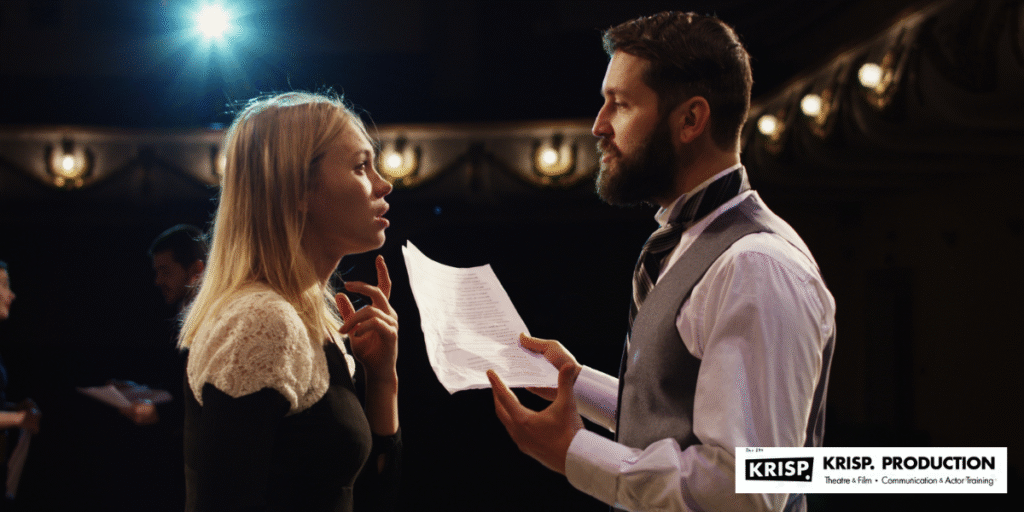
Think about it this way. Stage actors project their voices to fill an entire auditorium while screen actors whisper truth into a lens two feet away. Since cameras catch every blink, breath, and micro-expression you make, there’s no need for loud theatrical gestures or vocal power.
Here’s the thing, though. An actor on stage needs energy that carries across distance. On screen, that same energy reads as overacting.
At the end of the day, the performance skills that work in theatre often hurt your presence on camera. The acting fundamentals stay the same, but how you express them changes completely.
The Camera Problem: What Makes On-Screen Work So Intimidating
On-screen work intimidates most people because the camera captures every nervous habit, awkward pause, and tiny facial movement that would go unnoticed on stage. So the three biggest challenges actors face come down to magnification, isolation, and self-awareness.
1. Every Tiny Movement Gets Magnified
Your every gesture needs a reason because the camera magnifies everything by ten. For example, a nervous hand twitch on stage disappears in the dark, but fills the entire screen in close-up shots.
When you understand this, screen acting training teaches you how to stay still and grounded instead of fidgeting with your nerves. In practice, your body language becomes more intentional.
2. No Audience to Feed Off
Theatre gives you live laughter and applause to fuel your performance, but cameras just stare back silently. So you generate your own momentum and emotional energy without any external validation.
Acting classes teach self-generated presence because the only feedback you get is “cut” from the director. Basically, you’re performing in a vacuum. That shifts how you build confidence and maintain emotional intensity throughout each take.
3. Watching Yourself Back for the First Time
Most people hate watching themselves on camera because their voice sounds weird, and playback highlights every awkward movement.
But the good news is, the playback session becomes your teacher, showing exactly what works and what needs adjustment in real time. And honestly, confidence grows when you stop cringing at yourself and start seeing performance choices clearly instead of emotionally.
The experience of repeated viewing builds objectivity. After a few sessions, you start noticing patterns in your work that you can actually fix.
How Acting Course Training Programmes Build Your Screen Confidence
Acting course training programmes build screen confidence through repetition, technical feedback, and safe practice environments where you can fail without consequences.
In our experience with hundreds of students, repetition removes the fear factor. You rehearse scenes on camera until the lens becomes invisible furniture in the room. Instructors break down technical aspects like eyeline, frame awareness, and hitting marks so you control the shot instead of feeling controlled by it.
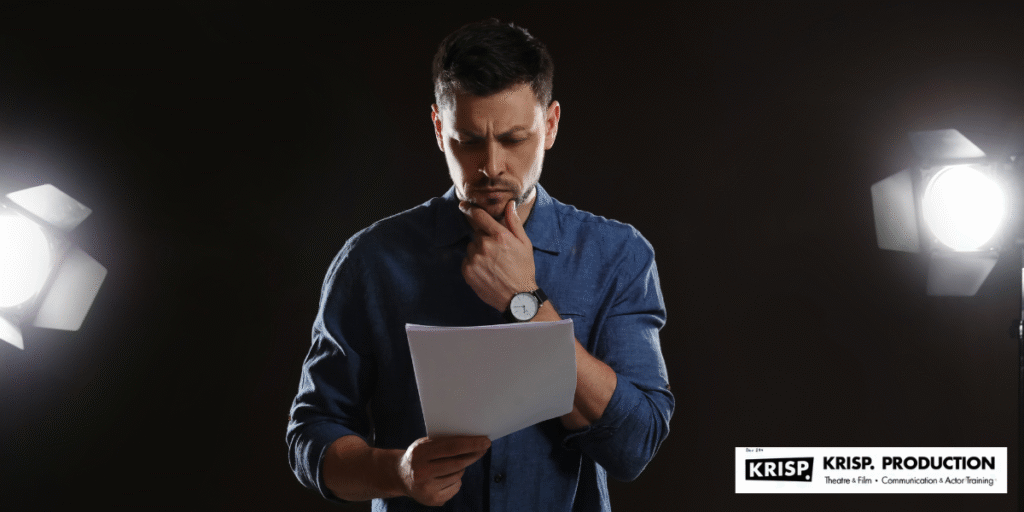
What’s more, safe practice environments let you fail privately and adjust before any real audition or professional work happens. Students get to test different acting approaches, make mistakes, and receive guidance without the pressure of a casting director watching.
Down the track, this builds muscle memory and genuine confidence that carries into real situations.
Now that you know how training programmes work, let’s look at what happens when you walk into an on-camera class in Singapore.
What Actually Happens in On-Camera Classes in Singapore
On-camera classes in Singapore start with filmed exercises that instructors review immediately, so you see exactly what the lens captures and what needs adjustment.
When you see what the camera captures, you stop second-guessing every choice you make. You learn blocking and hitting marks without looking down because screen acting requires natural movement within tight frames.
From there, feedback becomes immediate. Instructors replay your takes immediately and point out what translates well versus what feels forced or artificial.
Beyond the technical stuff, classes mix solo work and scene work with partners to practice listening and reacting authentically under the camera’s gaze. After all, the camera doesn’t care if you forgot your lines or tripped over a cable.
Worth Noting: Some acting classes in Singapore include audition technique and self-tape skills because most screen opportunities start with recorded submissions now. Students get hands-on experience with the technical side while building performance confidence.
Breathing Techniques and Body Awareness: The Foundation of Screen Presence
You know what? Confidence on screen starts with controlling your breath. In most cases, nervousness shows up as shallow breathing and tension in your shoulders.
If you practice rib expansion exercises, you learn to breathe deeply without visible shoulder movement that looks panicked on camera. Just place one hand on your ribcage, breathe in to expand it outward, then exhale slowly while gently pushing it back down. Within a few rounds, you’ll feel calmer and more grounded.
Also, body awareness drills like slow stretching and progressive muscle relaxation help you notice where you hold tension so you can release it before filming begins. These techniques also support voice work since proper breathing gives you vocal control without straining.
Bottom Line: The presence you see in confident actors comes from learning these fundamentals during training, not from natural talent alone.
Finding the Right Acting Classes in Singapore’s Arts Scene
From what we’ve seen across Singapore’s arts scene, not all acting classes focus on camera work. The arts community here offers dozens of options, but screen-specific training requires instructors who actually work on camera.
Consider the two main factors that separate spot-on programmes from mediocre ones.
1. Class Size and Personal Attention
Large classes save money, but you might only film once or twice while spending most time watching others.
Meanwhile, small groups of eight to twelve students mean more camera time and personalized feedback per session you attend. Plus, personal attention helps instructors spot your specific habits, like looking away from the camera or stiffening up during scenes.
2. Instructor Experience with the Camera
What makes one acting instructor better than another when it comes to screen work? Well, their real-world experience makes all the difference.
Teachers with film and television credits understand screen language better than stage-only instructors who never worked on set. They know what casting directors and industry professionals want to see in auditions because they’ve been through the process themselves recently.
The training you get from working actors beats generic acting theory every time. Even one workshop with someone who’s been on actual sets teaches you more practical technique than months of classroom theory.
Stop Hiding from the Lens
Acting classes give you the structured environment and professional guidance to build that comfort. You just need the willingness to watch yourself back, adjust what isn’t working, and try again.
Ready to stop freezing on camera? Our programme at KrisP Production brings together experienced instructors and hands-on training to help everyone from corporate professionals to aspiring actors develop genuine screen presence.
Check out our workshops in Singapore and see what’s possible when you train for the lens.