

How the Right Lenses Improve Comfort, Control, and Road Awareness After Dark
Introduction
Night time driving glasses are designed for drivers who feel uncomfortable, strained, or less confident once daylight fades. Bright headlights, reflective road signs, wet surfaces, and low-contrast surroundings can make night driving challenging even for people with otherwise good eyesight. These conditions often cause glare, eye fatigue, and slower visual reaction, which is why many drivers look for practical solutions to improve comfort and control.
Night time driving glasses are often considered by drivers who want a more comfortable and controlled experience after dark. By addressing common issues such as headlight glare, visual fatigue, and low-contrast road conditions, these glasses aim to support steadier vision rather than dramatic visual changes. Understanding their purpose and proper use allows drivers to evaluate them practically, focus on real benefits, and avoid relying on exaggerated promises when choosing eyewear for night driving.
What Are Night Time Driving Glasses?
Night time driving glasses are specialised eyewear designed to support visual comfort in low-light driving conditions. Unlike regular sunglasses, they are not meant to block sunlight. Instead, they aim to manage glare and visual noise caused by artificial lighting at night.
Most night time driving glasses use clear or lightly tinted lenses combined with anti-reflective coatings. These features are intended to make headlights and streetlights feel less harsh while keeping the road visible and natural.
Why Night Driving Feels Difficult for Many Drivers
Headlight Glare
Modern headlights are brighter than ever, especially LED and high-intensity systems. When these lights hit the eyes directly or reflect off wet roads, they can scatter light and reduce visual clarity.
This glare forces the eyes to work harder, leading to discomfort and slower reaction time.
Low Contrast and Visual Fatigue
At night, the difference between objects and their background is reduced. Pedestrians, road markings, and obstacles can blend into the environment, especially in poor weather.
Over time, this low contrast increases eye strain and mental fatigue, making driving feel more demanding.
How Night Time Driving Glasses Work
Reducing Reflections
The most important function of night time driving glasses is glare control. Anti-reflective coatings reduce light bouncing off the lens surface, allowing more useful light to reach the eyes.
This makes bright light sources feel softer and less distracting.
Enhancing Visual Balance
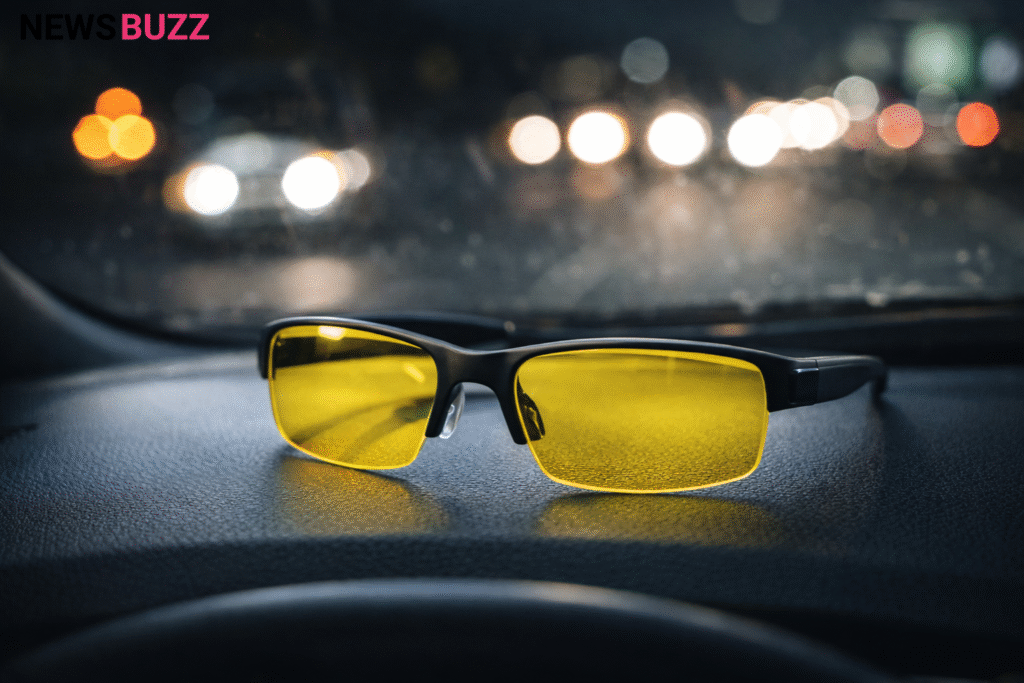
Some night driving glasses use a mild yellow or amber tint. This can slightly enhance contrast by filtering certain wavelengths of light that contribute to glare.
The effect is subtle and works best in moderate lighting conditions rather than complete darkness.
Key Features of Quality Night Time Driving Glasses
Anti-Reflective Lens Coating
A high-quality anti-reflective coating improves clarity and reduces internal lens glare. This feature often matters more than lens tint.
It also helps reduce eye fatigue during long night drives.
Lightweight and Comfortable Frames
Comfort is essential for night driving. Glasses that feel heavy or poorly balanced can become distracting over time.
Well-designed frames help drivers stay focused without constant adjustment.
Benefits of Night Time Driving Glasses
Reduced Eye Strain
Many users report that night time driving glasses make their eyes feel less tired. Reduced glare means less squinting and fewer visual interruptions.
This benefit is especially noticeable on highways and in urban traffic.
Improved Driving Comfort
Even when visibility itself does not dramatically improve, overall comfort often does. Driving feels calmer and more controlled when bright lights are less aggressive.
Comfort supports concentration and confidence behind the wheel.
Who Can Benefit Most From Night Time Driving Glasses
Drivers Sensitive to Light
Some people naturally react more strongly to bright lights. For these drivers, night time driving glasses may noticeably reduce discomfort.
Light sensitivity often increases with age or prolonged screen exposure.
Drivers Who Feel Fatigued at Night
Drivers who feel mentally or visually drained during night journeys may benefit from reduced glare and improved visual balance.
These glasses are often used as a support tool rather than a corrective solution.
Limitations and Drawbacks to Consider
Not a Replacement for Prescription Glasses
Night time driving glasses do not correct vision problems like nearsightedness or astigmatism. Drivers who need prescription lenses should prioritise proper vision correction.
Using the wrong eyewear can worsen night driving rather than improve it.
Tint Can Reduce Light Intake
While mild tints can help with glare, they also reduce the total amount of light entering the eyes. In very dark conditions, this can be counterproductive.
This is why overly dark lenses should be avoided for night driving.
Night Time Driving Glasses vs Regular Eyewear
Clear Lenses With Anti-Reflective Coating
For many drivers, clear prescription glasses with a high-quality anti-reflective coating provide excellent results at night.
The coating often delivers more benefit than tint alone.
Non-Prescription Options
Non-prescription night driving glasses can still improve comfort but vary widely in quality. Choosing well-made lenses is essential.
Avoid products that promise dramatic or guaranteed results.
Best Practices for Safer Night Driving
Night time driving glasses work best alongside good driving habits. Keeping windshields clean, adjusting mirrors properly, and ensuring headlights are aligned can significantly reduce glare.
Regular eye exams are equally important. Vision changes gradually, and outdated prescriptions can increase night driving difficulty.
Common Myths About Night Time Driving Glasses
They Instantly Improve Night Vision
A common misconception is that these glasses dramatically improve night vision. In reality, their benefits are usually modest and comfort-focused.
They support vision but do not transform it.
Yellow Lenses Work for Everyone
Yellow lenses are not universally effective. Some drivers prefer clear lenses with anti-reflective coatings instead.
Personal comfort and testing matter more than trends.
Conclusion
Night time driving glasses can be a valuable tool for drivers who struggle with glare, eye strain, or discomfort after dark. Their real strength lies in reducing harsh reflections and improving driving comfort rather than creating dramatic visual changes.
When chosen carefully and used alongside proper vision correction and safe driving habits, night time driving glasses can support more relaxed and confident night driving. Understanding both their strengths and limitations allows drivers to use them wisely and realistically.
Frequently Asked Questions (FAQ)
Do night time driving glasses really help?
They can reduce glare and improve comfort for many drivers, but results vary between individuals.
Are tinted lenses better than clear lenses?
Not always. Clear lenses with anti-reflective coating are often just as effective.
Can night driving glasses replace prescription eyewear?
No. Prescription correction should always come first if needed.
Are night time driving glasses safe to use?
Yes, as long as the lenses are light enough and do not reduce visibility.
Who should consider using night time driving glasses?
Drivers who experience glare, eye strain, or discomfort during night driving may benefit the most.